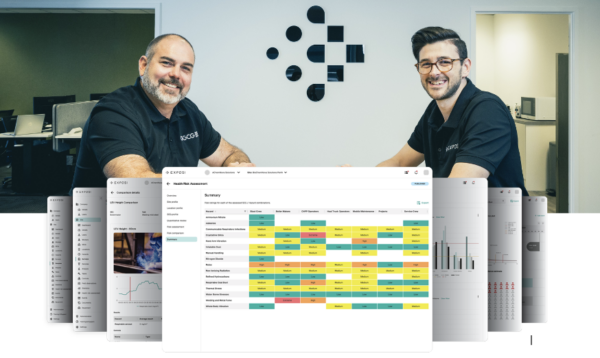
A Complete Hygiene Management System in One Integrated Platform
Across the mining industry, senior leaders carry increasing accountability for occupational health outcomes, yet often lack clear, timely visibility into the risks they are responsible for managing. Exposure related health risks are long-term, cumulative and complex, and executives are expected to demonstrate governance assurance across multiple sites, jurisdictions and work activities.
Occupational hygiene now operates in a more complex environment, regulatory requirements are continuing to evolve, and hygiene information is no longer confined to the hygienist’s desk. Safety leaders, engineers, site managers and executives all rely on it to support prioritisation, guide investment, and maintain oversight.
Significant volumes of data are generated by occupational hygiene programs. Yet without integration and structure, that data rarely translates into timely, organisation-wide exposure reduction. Information is often distributed across spreadsheets, laboratory reports, PDFs and hardware platforms, making it difficult to see patterns across sites, activities and timeframes, and to answer fundamental questions with confidence:
Where are our highest exposure risks? Are controls working? Are we improving over time?
For many organisations, the challenge has not been a lack of monitoring, but a lack of structure to bring hygiene information together in a way that supports informed action.
The structural gap in occupational hygiene systems
This is a challenge Green Consulting Group (GCG) has encountered repeatedly. As Australia’s largest independent occupational hygiene and safety consultancy, GCG works across mining operations nationally, supporting both site-based programs and corporate-level oversight.
Until recently, no single system had been designed to manage occupational hygiene end-to-end, with exposure reduction as its central focus. GCG developed Exposi to change that: a first-of-its-kind, purpose-built occupational hygiene platform designed to move beyond data storage and reporting into active exposure control.
Historically, hygiene tools were developed to solve individual problems, measuring exposure, recording results or generating reports, rather than operating as an integrated management system. Many legacy platforms primarily serve as databases, storing sampling data and producing basic reports.
In practice, hygiene information is typically fragmented. Real-time monitoring systems often operate separately from traditional sampling processes. Aggregating data across sites can be time-consuming, and linking exposure results to specific tasks or controls is commonly manual and retrospective.
This creates friction. Hygienists spend time managing data rather than managing exposure. Safety leaders lack a consolidated view of risk. Executives receive reports, often without clear visibility of how controls are performing across the organisation.
Exposi was designed to address these limitations – bringing monitoring, analysis and control into a single connected system.
The platform was developed within a consultancy environment with direct input from a team of Certified Occupational Hygienists, ensuring domain expertise shaped its design and continues to guide its evolution.
“This took years of work by people who actually understand hygiene,” says GCG Chief Executive Officer, Brendan Green. “It wasn’t something you could just bolt together.”
From monitoring to control: the real-time shift
At its core, occupational hygiene is about reducing exposure to protect worker health. Monitoring is essential, but monitoring alone does not reduce exposure.
Traditional sampling programs often operate on extended timeframes. Samples are collected and sent to laboratories, with results returned weeks later. Decisions about controls can follow months after the exposure event occurred.
“Traditional monitoring and reporting doesn’t change exposure profiles rapidly enough,” says GCG Innovation and Products Manager, Adam O’Malley. “We needed a system that helps people move beyond just sampling.”
Exposi enables a shift from reactive monitoring to active exposure control management.
A defining feature of the platform is its ability to integrate real-time exposure data alongside traditional sampling results. Exposure data from monitoring devices can be ingested into the system, enabling comparison of exposure levels under different control conditions. The platform is device-agnostic and multi-contaminant, allowing sites to manage data across multiple hazards regardless of the monitoring equipment used.
Real-time exposure data can also be aligned with video footage of the activity being performed, enabling teams to see what was occurring at the exact moment exposure peaks arise. This enables side-by-side control comparisons and allows organisations to validate control effectiveness more quickly and intervene earlier.
Rather than relying solely on retrospective exceedance reporting, organisations can implement evidence-based changes within days rather than months.
Exposi is designed to integrate with monitoring hardware, laboratory providers and existing enterprise systems, ensuring hygiene data contributes to broader operational governance rather than remaining siloed.
How it works in practice
The platform supports the full hygiene workflow, from hazard identification, sample management, through to statistical analysis, exposure control management and reporting
“What we’ve built is not just a reporting tool,” says O’Malley. “It guides hygienists through the entire process – planning, analysing and strengthening controls in a structured way.”
Hazards are identified and workers grouped into Similar Exposure Groups (SEGs). Risks are assessed using available data and professional judgement, and structured sampling plans are developed and tracked across sites and jurisdictions.
Field observations, laboratory results and control measures are stored centrally. Statistical analysis can be performed within the system, and health risk assessments updated accordingly.
Where real-time monitoring is deployed, exposure peaks can be directly linked to the tasks being performed, providing practical evidence to guide engineering changes, work practice adjustments and targeted interventions.
Responding to regulatory change
Regulatory changes reinforce this shift from monitoring to active control management.
The nationally agreed transition from Workplace Exposure Standards (WES) to Workplace Exposure Limits (WEL), effective 1 December 2026, will introduce revised limits for 278 hazardous substances, with many becoming more stringent.
As thresholds reduce, exposures that were previously compliant may no longer be within limit. Lower limits increase the likelihood of exceedances. Regulators will expect organisations to demonstrate that exposure risks are being systematically managed and that controls are effective.
Exposi enables configuration of different exposure limits where required and provides a consistent framework for managing compliance and governance across multiple sites and jurisdictions.
A structured approach to exposure reduction
Occupational hygiene information is required at multiple levels within an organisation. Executives require assurance and oversight. Hygienists require detailed technical insight. Safety leaders and engineers require visibility of where risk is concentrated and whether controls are effective.
Exposi brings it all together in an easy-to-use hygiene management system that supports end-to-end occupational hygiene management — from identifying hazards, managing samples and measuring exposure, through to strengthening controls and reviewing performance over time.
“This is about improving worker safety and improving lives,” says Green.
“By having a system where everything can be done in one place, time is saved, and that means people can focus on what actually matters.”
By centralising hygiene data and insights and integrating real-time monitoring, Exposi enables organisations to identify high-risk activities early, validate exposure controls and implement changes quickly and with confidence.
This supports a more proactive and transparent approach to exposure management, focused not only on compliance but on measurable reduction in exposure and sustained protection of worker health.
Innovation and recognition
The real-time capability underpinning Exposi began as a focused effort to improve dust exposure control and has since been integrated into a broader hygiene management system.
Exposi’s predecessor, the Exposi real-time app, has received multiple industry innovation awards, including Hunter Valley Safety Awards Most Innovative WHS Idea (SME) and Government of Western Australia – Department of Mines, Industry Regulation and Safety Work Health and Safety Invention of the Year, recognising its contribution to advancing practical exposure control.
Is all WEL? What do the Proposed Exposure Limits Mean for Mining?
At the recent Australian Institute of Occupational Hygienists (AIOH) Conference, GCG occupational hygienists Paul Richardson and Peter Franchina prepared a poster examining the potential impact of proposed changes to Australia’s workplace exposure limits. Their work examined a question that may not…
There’s been a lot of focus in recent years on respirable crystalline silica – and for good reason. Across Australia and globally, dust exposure is coming under heavier scrutiny, and the need for more responsive, data-driven approaches to managing dust…
Substitution gone wrong – a case study of hexavalent chromium occurrence in exhaust systems
Calcium chromate is a toxic, yellow coloured powdery compound. It is a strong oxidising agent and can be used as a corrosion inhibitor and to depolarise batteries. It is also produced when chromium is present with an oxidant, such as…
Real-time dust monitoring has really come into its own in the last few years. The ubiquity of real-time monitoring devices and the recent emergence of intelligent dust exposure control applications and platforms like GCG’s ‘Exposi’ system have taken monitoring and…
Increased awareness of silicosis and other occupational lung diseases caused by exposure to hazardous levels of respirable crystalline silica has prompted employers and workers to seek ways to reduce the potential for worker exposure to hazardous dust. This has driven…